WHY KAILASH
MOUNT KAILASH

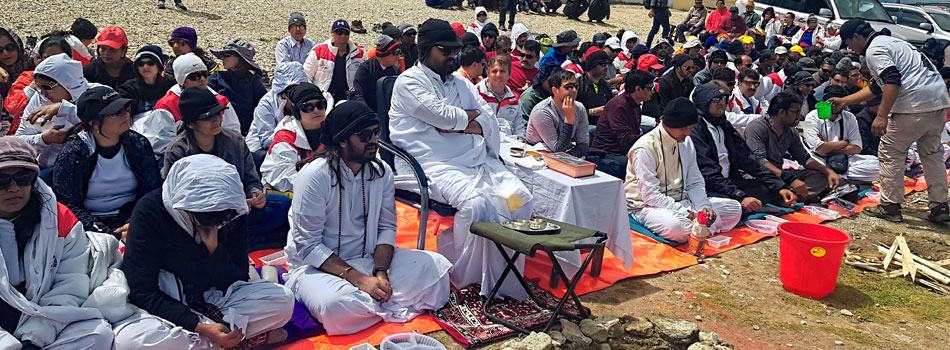
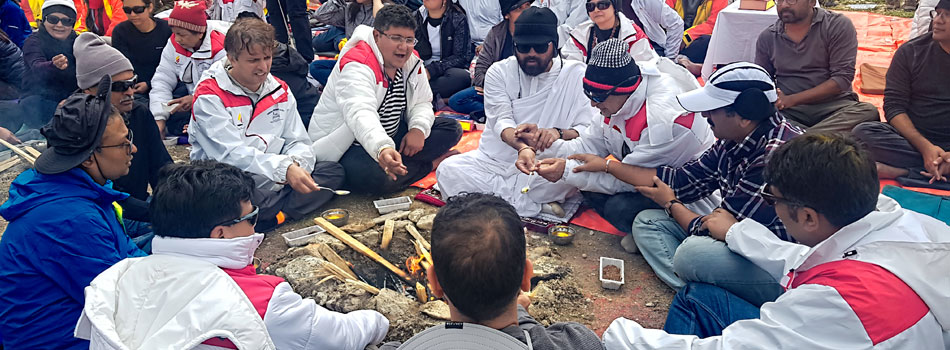
For well over a thousand years, pilgrims have journeyed here to pay homage to the mountain's mystery, circumambulating it in a ritual that continues to this day. Their faith proclaims that not just the mountain's ice - capped summit but the entire region is the abode of the Gods.
Hindus cross the frozen mountain passes of India and Nepal to circle the peak that is Lord Shiva�s throne and bathe in the lake created from the manas (mind) of Brahma. Buddhists journey from Nepal, Bhutan, Ladakh, Mongolia and every corner of Tibet to this holiest of mountains they call Kang Rinpoche. Jainism knows Kailash as Mount Astapada. Atop the summit, the religion's founder, Rishabhanta, gained spiritual liberation. And to the Bonpo, followers of Tibet�s old pre-Buddhist beliefs it is the �Nine - Storey Swastika Mountain�, the mystic �soul� of the entire region. Each holds different beliefs, each sees different Gods, but the underlying reality is the same.
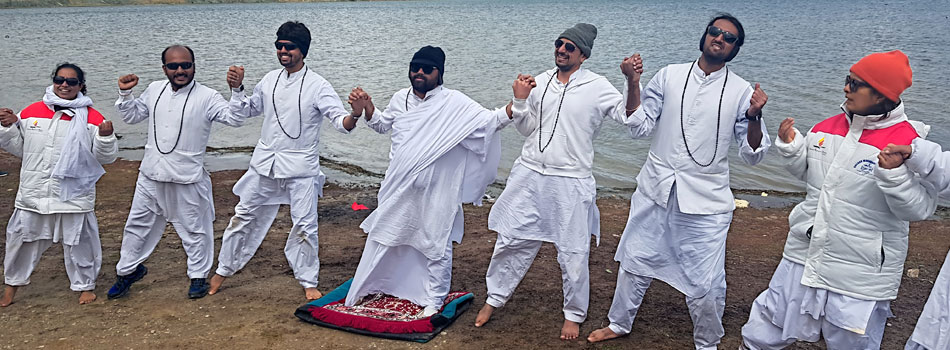
Manasarovar, the lake born from the mind of Brahma, is among the most ancient and holy of Hindu pilgrimage sites. Hindu legend tells of twelve Rishis, wise 'Seers' of pre-Vedic times who retreated to this remote region for meditation and prayer. They stayed many years performing penances and austerities, and were awarded a vision of Shiva and Parvati, the divine Lord and Lady of Kailash. But still they lacked, in this dry land, a suitable place to perform the daily ablutions required of devout Hindus. The Rishis prayed to Brahma so that they might fulfill their duties. From the infinite depths of his all-encompassing mind Brahma created Manasarovar. Manasarovar's clear waters are said to possess miraculous healing properties.
According to ancient Hindu folkfore, it was Brahma - the Creator, who himself created Manasarovar and the divine Jambu tree, which though invisible to the human eye, grows in the centre. It is for this reason that the world was called Jambudwipa by the ancients; and it is said that because of the fruits of this divine tree that the waters of the Manasarovar have turned into a life - giving elixir! Manasarovar's clear waters are said to possess miraculous healing properties.
'When the earth of Manasarovar touches anyone's body or anyone bathes in the lake, he shall go to the Paradise of Brahma, and he who drinks its waters shall go to the heaven of Shiva and shall be released from the sins of a hundred births. Even the beast who bears the name of Manasarovar shall go to the paradise of Brahma. Its waters are like Pearls.' (The Ramayana).
The pilgrimage to Kailash and Manasarovar has always been considered the most difficult in Asia. The distances seem unending. The weather is harsh. The temperature could soar to 40 Degrees C and drop to 0 Degrees just in a matter of a few hours. Supplies are virtually non-existent. The pilgrim has to undergo extreme hardship under extreme temperatures. The terrain is not very friendly either. Nevertheless, pilgrims come from all parts of the world, defying all hardships. They trek for 53 km around Kailash and 90 km around Manasarovar at altitudes between 15,000 - 19,000 feet above sea level.
Mt. Kailash has long been an object of worship for four Major religious, for Hindu, it is domain of Shiva, It is also the abode of samvara-a multiarmed, wrathful deity worshipped in the chakrasamvara Tantric cycle of Tibetrian Buddhism. The joins of India also reverse the mountain as the site at which the first of their saints emancipated. And in the ancient Bon religion of Tibet, Kailash was the secred nine storeys Swastika Mountain, upon which the Banpo founder Shenrab alighted from haven. The 53 Km. Kailash circuit is the holist of all-Hindu as well as Buddist pilgrimages and the beacon, which draws most traveller to western Tibet. It is said that a single Parikarma erases the accumulated sins of a lifetime, while 108 cicurmbulation will achieve Salvation.
Lake Mansarovar

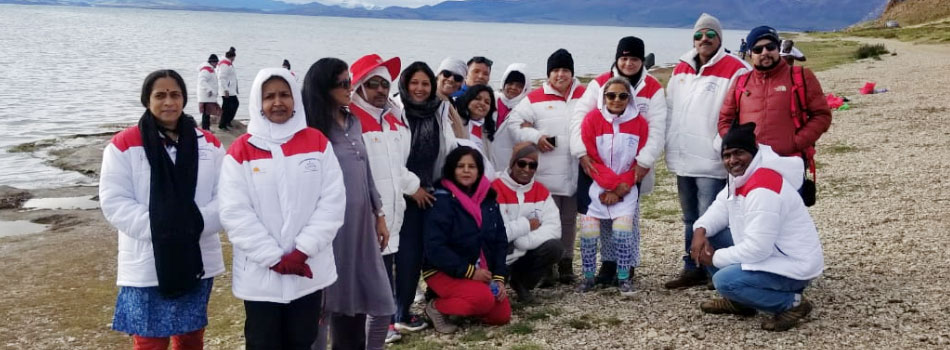
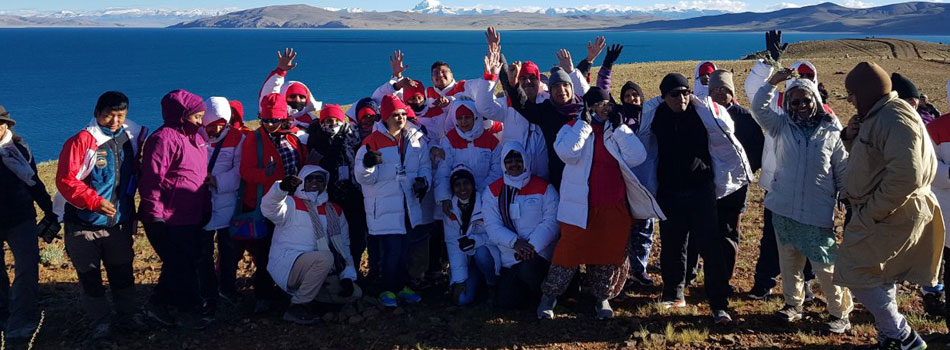
Sprawling below Mount Kailash is the sacred lake Manasarovar (4580m), where ritual bath will deliver a pilgrim to brahm's paradise and drink of its water relinquishes the sins of a hundred lifetimes.
The Inner Kora (circuit) or circumambulation of Mount Kailash from a very close distance, is certainly one of the most harshest pilgrimages of all. This involves a 34 km. journey on foot around the Holy Mountain, at 19,000 feet above sea-level. Here the landscape is entirely made up of rock, crevices, snow and ice. Apart from two small monasteries no humans live along the inner Kora region. It is said that one can do the inner Kora of Mount Kailash only after completing 13 outer Koras. It is a belief that during the Year of the Horse one can do an Inner Kora after doing only one Outer Kora instead of the customary 13. Very few people have attempted to do the inner Kora. Some of them have not returned. The entire Kailash - Manasarovar region is dotted with ancient Buddhist monasteries. Many of these are uninhabited.
Mt. Kailash North Face

Mt. Kailash South Face

Gauri Kund, the �Lake of Mercy"

Gurla Mandhata with Houre Village

Gurla Mandhata


IMPORTANT LOCATIONS


